
Introduction to Textile Industry Inspection
Textile industry inspection is essential for ensuring the quality, safety, and reliability of textile products, including garments, home textiles, industrial fabrics, and personal protective equipment (PPE). These inspections help manufacturers, suppliers, and buyers maintain high standards by identifying defects, verifying material specifications, and ensuring adherence to industry standards. At TNV Inspection Division, we provide independent, third-party inspection services for a wide range of textile products. Our inspections cover various stages, from raw material assessment to final shipment verification, ensuring that every product meets international quality and safety standards.
The textile industry produces
A wide range of products, from r role presentation” garments and home furnishings to personal protective equipment (PPE) and industrial packaging materials. Ensuring quality and reliability at each stage of production is essential to meet industry standards and customer expectations. TNV Inspection Division provides independent inspection and verification to assess the quality, safety, and performance of various textile products.
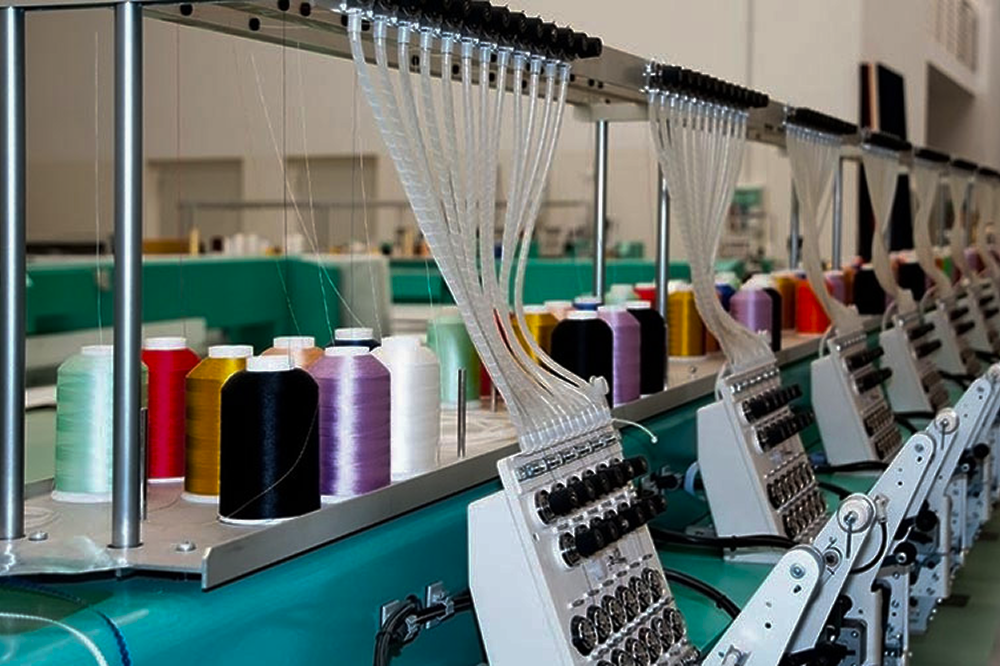
Scope Covered in Inspection
TNV Inspection Division inspects a broad spectrum of textile products, including but not limited to:
Stages of Inspection
1. Raw Material Inspection
2. In-Process Inspection (During Production)
3. First Article Inspection (FAI)
4. Final Random Inspection (FRI)
5. Pre-Shipment Inspection
6. Container Loading Inspection
Inspection Methods (Applicable to All Textile & PPE Products)
Visual Inspection
Sampling Inspection
Size and Dimensional Measurement
Standards and Inspection Criteria for Textile Products
Standards and Inspection Criteria for Textile Products
Standards and Inspection Criteria for Textile Products
Standards and Inspection Criteria for Textile Products
- 1. Inspection Standards for Textile Products
- 2. Personal Protective Equipment (PPE) Standards
- 3. Garments, Home Textiles & Furnishing Standards
- 4. Jute and Woven Sack Standards
- 5. Polyester & Raw Textile Material Standards
- 6. Internal Inspection Procedures & Work Instructions
Textile inspection follows internationally recognized standards to ensure quality, durability, and compliance with industry requirements. The key standards include:
- ANSI/ASQ Z1.4:2008 or ISO 2859 – Applied for PPEs, garments, and textile product inspections, ensuring defect sampling and acceptance quality limits (AQL).
- ASTM D 3990 (4-Point Fabric Inspection System) – Used for fabric inspection, determining fabric quality based on defect points per unit area.
To ensure the safety and performance of PPEs, the following standards are applied:
- IS 9473:2002 – Standard for respiratory protective devices, including masks for nose and mouth protection.
- IS 16289:2014 – Standard for surgical face masks, covering filtration efficiency and performance criteria.
- IS 17630:2021 – Standard for medical textiles, including bedsheets and pillow covers used in healthcare.
- IS 5405:2019 – Standard for sanitary napkins, covering hygiene and safety requirements.
SOP No. P-INSP-WI-SL-001 – Used for apparel, garments, and clothing inspections.
- SOP No. P-INSP-WI-SL-002 – Applied to home textiles, including bed linens, curtains, and towels.
- RSJ_INSP_FT_57 dt.03/02/2017 – Used for garment & home furnishing inspections, including first article inspection and final random inspection.
- IS 13489:2000 – Standard for bed mattresses, ensuring material durability and construction compliance.
The durability, strength, and compliance of jute bags and woven sacks are evaluated based on:
- IS 16186:2014 – Standard for lightweight jute sacking bags, covering strength and durability requirements.
- IS 15138:2010 – Standard for jute bags used for sugar packaging, ensuring material compliance.
- IS 14887:2000 – Standard for PP/HDPE woven sacks used for food grain packaging.
- IS 11652:2017 – Standard for HDPE woven sacks used for general packaging.
- SOP No. PR-IN-CRS-IN-011 – Used for jute bag inspections, covering size, weight, and visual quality.
Inspection of raw textile materials, such as polyester staple fibre, adheres to:
- IS 17263:2022 – Standard for polyester staple fibre, ensuring compliance with material specifications.
- SOP No. WI-IN-CRS-IN-004 – Used for PPEs for nose and mouth protection, ensuring compliance with safety and performance standards.
- SOP No. WI-IN-CRS-IN-005 – Applied for PPEs for body wear, such as jackets, coats, vests, and trousers.
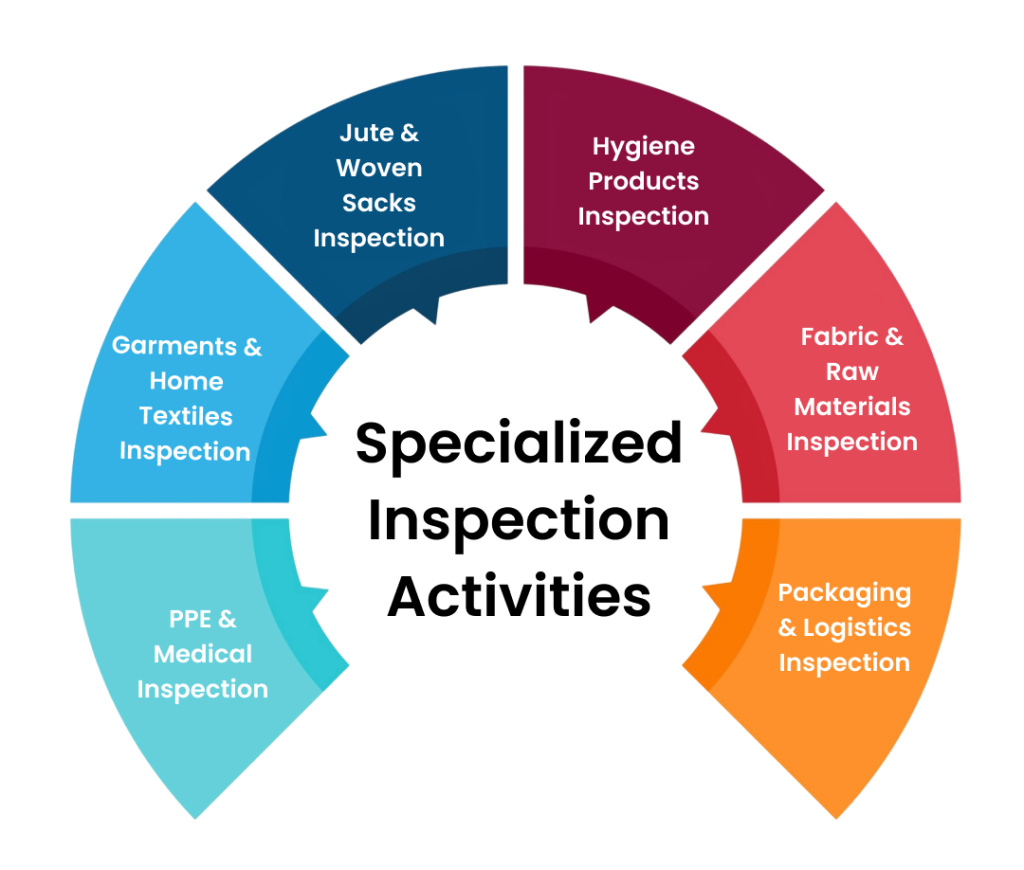
Specialized Inspection Activities
- PPE & Medical Textile Inspection
- Garments & Home Textile Inspection
- Jute Bags & Woven Sacks Inspection
- Sanitary Napkins & Hygiene Product Inspection
- Fabric & Raw Material Inspection
- Packaging & Logistics Inspection
Filtration Efficiency Testing
Breathability & Air Permeability Test
Elasticity & Stretch Test
Fluid Resistance & Synthetic Blood Penetration Test
Seam & Stitch Strength Testing
Sterility & Hygiene Check
Color Fastness Test
Seam Slippage & Stitch Density Check
Shrinkage & Dimensional Stability Test Tear & Tensile Strength Testing
Printing & Embroidery Quality Check
Fabric Weaving & Knitting Defects Identification
Fabric Strength Testing
Load-Bearing Capacity Check
Moisture Content Test
Drop Test
Stitching & Seam Strength Test
Absorbency Test
Leakage Test
Surface Dryness Test
Material Softness Check
Packaging Integrity Inspection
Point Fabric Inspection System
Stiffness & Drape Test
Carton Drop Test.
Barcode & Label Verification
Palletizing & Loading Inspection
Quantity & Lot Verification
Inspection Process & Testing Equipment Used
Textile inspection follows internationally recognized standards to
ensure quality, durability, and compliance with industry
requirements. The key standards include:
ANSI/ASQ Z1.4:2008 or ISO 2859
ASTM D 3990 (4-Point Fabric Inspection System)
To ensure the safety and performance of PPEs, the following
standards are applied:
IS 9473:2002
IS 16289:2014
IS 17630:2021
IS 5405:2019
The quality and compliance of garments, home textiles, and
furnishing products are assessed using:
SOP No. P-INSP-WI-SL-001 –
SOP No. P-INSP-WI-SL-002 –
RSJ_INSP_FT_57 dt.03/02/2017 –
IS 13489:2000 –
The durability, strength, and compliance of jute bags and woven sacks are evaluated based on:
- IS 16186:2014
- IS 15138:2010
- IS 14887:2000
- IS 11652:2017
- SOP No. PR-IN-CRS-IN-011
Inspection of raw textile materials, such as polyester staple fibre, adheres to:
IS 17263:2022
To maintain accuracy and consistency in inspections, TNV Inspection Services follows specific work instructions (SOPs) for each type of inspection:
- SOP No. WI-IN-CRS-IN-004
SOP No. WI-IN-CRS-IN-005
- Fabric Thickness Gauge
- GSM Cutter & Weighing Balance
- Color Matching Cabinet
- Tensile Strength Tester
- Shrinkage Tester
- Pilling Tester
- Abrasion Tester
- Seam Strength Tester
PPE and Medical Textile Testing Equipment
- Breathability Tester
- Filtration Efficiency Tester
- Synthetic Blood Penetration Tester
- Tensile & Tear Strength Tester
- Moisture Vapor Transmission Tester
Elastic Recovery Tester
Tester – Measures fabric distortion after washing
Jute Bags & Woven Sacks Testing Equipment
- Fabric Weight Balance
- Tensile Strength Tester
- Stitching & Seam Strength Tester
- Drop Tester
- Bursting Strength Tester
- Absorbency Tester
- Leakage Protection Tester
- Dryness Tester
Softness Tester
- Rulers & Measuring Tapes
- Calipers & Micrometers
- Visual Inspection Booths
- Reference Samples & Swatches
- Magnifying Glasses
The Importance of Textile Industry Inspection
The textile industry is a vast and dynamic sector that supplies everything from daily wear clothing to high-performance industrial fabrics. With such a diverse range of products, maintaining quality and safety is crucial. Textile inspection plays a key role in ensuring that fabrics, garments, and other textile products meet industry standards and consumer expectations. Without proper inspection, manufacturers risk producing defective textiles, facing shipment rejections, and damaging their brand reputation.
One of the primary reasons for textile inspection is to ensure product quality. Common textile defects such as uneven dyeing, weak fabric strength, poor stitching, and excessive pilling can affect the final product’s durability and appearance. By identifying and correcting these defects early in the production process, manufacturers can deliver superior products that meet customer expectations. Additionally, strict adherence to international standards is necessary for exporting textile goods to global markets. Important standards like ISO 2859 (sampling procedures for inspection), ASTM D 3990 (4-Point Fabric Inspection System), and IS 9473:2002 (PPE standards) help regulate product quality, durability, and safety.
Textile inspection is especially critical for safety-related products, such as medical textiles, PPE, and fire-resistant fabrics. These items undergo breathability tests, flame resistance checks, and toxic substance testing to ensure they meet safety regulations. Without thorough inspection, defective safety textiles can pose serious risks to users and lead to product recalls, legal consequences, and health hazards. Moreover, systematic inspections reduce production costs and waste by detecting defects at different manufacturing stages—First Article Inspection (FAI), In-Process Inspection, Final Inspection, and Lot Inspection—helping manufacturers eliminate issues before full-scale production.
Beyond quality control and cost savings, textile inspection enhances market competitiveness. Buyers and retailers prefer suppliers who consistently deliver defect-free, high-quality products that meet international standards. Well-inspected textiles increase customer trust, reduce return rates, and improve brand reputation, ultimately leading to higher sales and long-term business success.
At TNV Inspection Division, we specialize in comprehensive textile inspections, ensuring adherence to ISO 17020 standards and accreditation from UAF. Our expertise covers garments, home textiles, industrial fabrics, medical textiles, and packaging materials like jute bags and woven sacks. With global inspection services, TNV Inspection Division helps manufacturers, exporters, and retailers maintain high-quality standards and achieve market success. Ensure your textiles meet the highest industry standards—partner with TNV Inspection Division today!