
Independent Product Checks Before Dispatch, Shipment or Final Acceptance
Before any product reaches a buyer, customer, warehouse or project site, its quality should be checked against the agreed requirements. A product may look ready from the supplier’s side, but hidden defects, poor workmanship, wrong dimensions, weak packaging or incomplete documentation can still create serious problems after delivery.
Many buyers, manufacturers, importers, exporters and project owners use Product Quality Inspection Services to verify product condition before dispatch, shipment, installation or final acceptance. TNV Inspection Division provides independent third-party inspection, verification, review and reporting support to help businesses make informed decisions before goods move forward.
Our inspectors check products against purchase orders, approved samples, drawings, technical specifications, quality plans, packaging requirements and applicable standards. The purpose is simple: identify quality issues before they become costly disputes, rejected shipments or customer complaints.
What is Product Quality Inspection?
A business uses product quality inspection to check whether goods meet the required quality, quantity, workmanship, packaging and documentation expectations before they are accepted or delivered.
This inspection may be done at the supplier’s factory, warehouse, production unit, dispatch area or project site. The inspector physically checks the actual products and records findings with photographs, measurements and observations.
A proper inspection is not based only on supplier confirmation. It gives the buyer or client an independent view of product condition. This helps companies decide whether to approve dispatch, ask for correction, hold the order, request rework or arrange re-inspection.
Why Does Product Quality Inspection Matter?
Late discovery of quality problems can create heavy losses. Once goods are shipped, delivered or installed, correcting defects becomes more difficult and expensive. Return logistics, replacement, project delays, customer dissatisfaction and payment disputes can all affect business performance.
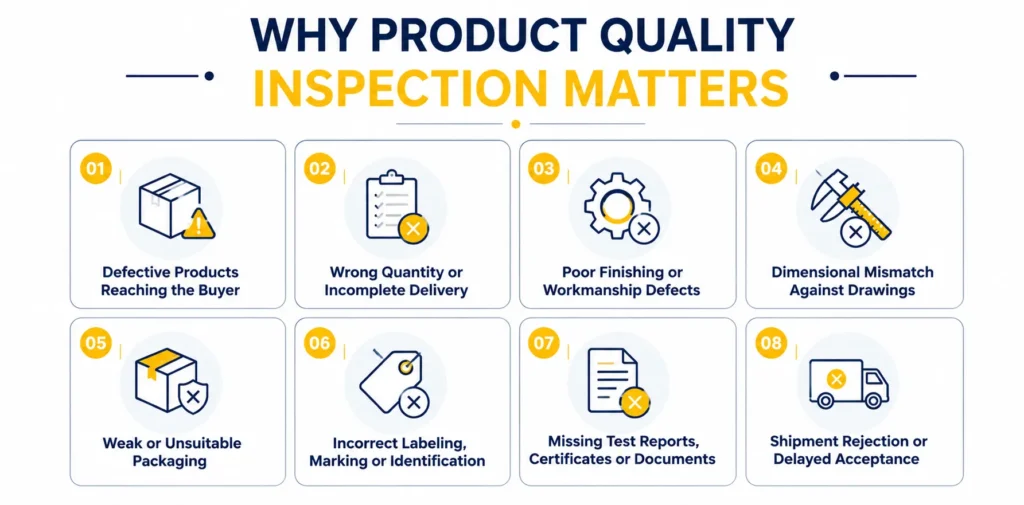
Skipping product inspection can lead to:
- Defective products reaching the buyer
- Wrong quantity or incomplete order delivery
- Poor finishing or visible workmanship defects
- Dimensional mismatch against drawings or samples
- Weak or unsuitable packaging for transport
- Incorrect labeling, marking or product identification
- Missing test reports, certificates or dispatch documents
- Shipment rejection or delayed customer acceptance
A timely product quality check helps businesses reduce these risks before products leave the supplier location.
What We Inspect
TNV Inspection Division provides product inspection support across different product categories, industries and supply-chain stages. The inspection scope is decided based on the client’s requirement, product type, buyer specification and applicable acceptance criteria.
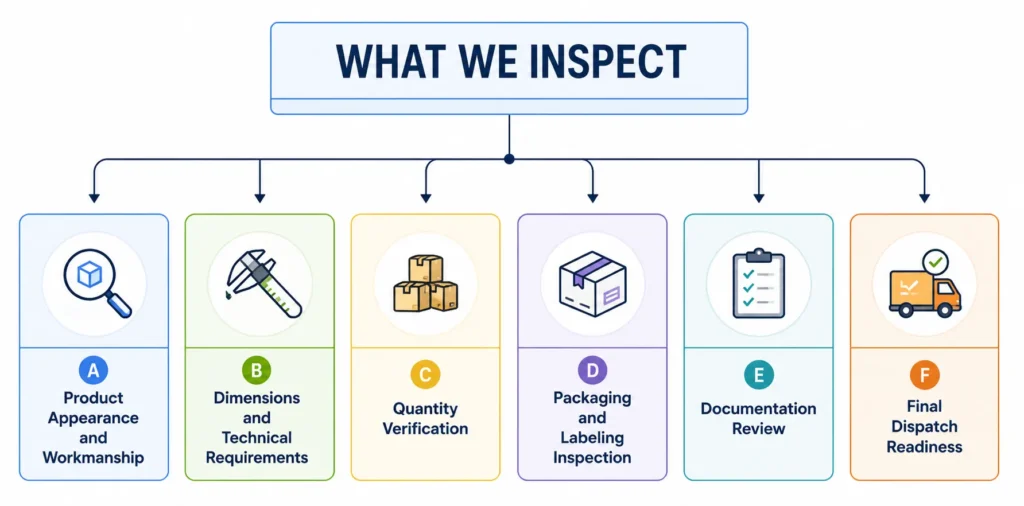
A. Product Appearance and Workmanship
Our inspectors check the visible condition of products to identify defects that may affect buyer acceptance or customer satisfaction.
This may include:
- Surface defects
- Scratches, dents, cracks or damage
- Poor finishing
- Sharp edges or rough workmanship
- Color variation
- Incorrect design or model
- Contamination or stains
- Physical deformity
- Assembly defects
For many consumer, industrial and engineering products, appearance and workmanship are the first signs of quality performance.
B. Dimensions and Technical Requirements
Many products must match exact technical requirements. Our inspectors can verify dimensions, measurements and product specifications against drawings, approved samples or technical documents.
This may include:
- Length, width, height and thickness
- Weight and size verification
- Tolerance checks where applicable
- Alignment and fitting checks
- Model and specification verification
- Component matching
- Drawing-based inspection
- Buyer specification review
This step is especially important for engineering goods, fabricated parts, construction materials, machinery components and custom-made products.
C. Quantity Verification
Incorrect quantity can delay production, installation, shipment acceptance or customer delivery. TNV Inspection Division can verify product quantity against purchase orders, packing lists, lot details and dispatch documents.
Quantity checks may include:
- Total product count
- Carton or package count
- Lot quantity
- Batch quantity
- Quantity per package
- Missing items or accessories
- Short supply or excess supply identification
This helps buyers confirm that the order is complete before goods are moved.
D. Packaging and Labeling Inspection
Good products can still be rejected or damaged if packaging is poor. Our inspectors review packaging condition, labeling, marking and dispatch readiness before shipment or delivery.
This may include:
- Carton, crate, pallet or box condition
- Packaging strength and suitability
- Product protection during transport
- Labeling accuracy
- Shipping marks
- Handling instructions
- Batch number, model number or item code
- Buyer-specific packaging requirements
- Export packing checks where applicable
A strong packaging review helps reduce transit damage and shipment confusion.
E. Documentation Review
Product quality is not complete without the correct documents. Our inspection may include review of available documents as per the agreed scope.
This may include:
- Purchase order
- Approved sample details
- Technical specifications
- Drawings
- Packing list
- Test reports
- Material certificates
- Product data sheets
- Quality inspection records
- Supplier declarations
- Dispatch documents
Document review helps confirm whether the supplier has maintained the required records before shipment or acceptance.
F. Final Dispatch Readiness
Before goods leave the supplier location, the final check helps confirm whether the product is ready to move.
This may include:
- Product condition
- Order completeness
- Packing status
- Labeling and marking
- Documentation availability
- Loading readiness
- Buyer-specific requirements
- Any visible nonconformity
This is useful for buyers who need an independent confirmation before approving dispatch.
Our Product Quality Inspection Process
TNV Inspection Division follows a structured process so clients receive clear and useful inspection reports.
- You Share the Inspection Requirement: The client shares product details, supplier location, purchase order, specification, approved sample, drawings, inspection checklist and expected inspection date.
- We Review the Scope: Our team reviews the inspection requirement and confirms the inspection scope, reference documents, location, timing and feasibility.
- We Assign a Suitable Inspector: A qualified inspector is assigned based on product type, industry requirement and technical scope. The inspector reviews available documents before visiting the site.
- On-Site Inspection is Conducted: The inspector visits the supplier factory, warehouse, dispatch location or project site and checks the product against the agreed inspection criteria.
- Findings are Documented: All observations are recorded with photographs, measurements, remarks and supporting evidence wherever applicable.
- Inspection Report is Issued: The client receives a structured report explaining what was checked, what was found and whether the goods require correction, approval or further review.
- Re-Inspection Can Be Arranged: If the supplier corrects defects or completes pending requirements, TNV Inspection Division can conduct re-inspection to verify the updated product condition.
Inspection Methods We Use
The method depends on the product type, inspection stage and client requirement. TNV Inspection Division uses practical inspection methods to support reliable reporting.
- Visual Inspection: Our inspectors check the product surface, appearance, finishing, workmanship and visible damage.
- Dimensional Measurement: Where required, measurements are taken to verify size, thickness, weight, alignment or other product dimensions against drawings or specifications.
- Quantity Verification: The inspector checks product count, package count, lot quantity and order completeness against purchase documents.
- Sampling Inspection: For larger lots, sampling may be done based on agreed criteria, AQL approach or client-defined sampling requirements.
- Functional Checks: For selected products, basic functional checks may be conducted where the scope allows and required facilities are available.
- Packaging Review: Packaging material, product protection, shipping marks, labels and handling instructions are reviewed before dispatch or shipment.
- Document Review: The inspector reviews relevant documents such as purchase orders, product specifications, drawings, packing lists, test records and certificates.
- Photo-Supported Reporting: Inspection findings are supported with photographs and clear remarks so the client can understand the product condition remotely.
When Businesses Need Product Quality Inspection
A company may need product quality inspection whenever product acceptance depends on quality, quantity, packaging or documentation.
This service is useful when:
- A new supplier is being used
- Goods are ready for dispatch
- The buyer cannot visit the supplier location
- The order is large or high-value
- Products are custom-made
- Export or import shipment is involved
- Previous quality issues have occurred
- Final acceptance is required before payment
- Project materials need verification before installation
- Packaging and labeling must be checked before delivery
Many companies combine Product Inspection Services with supplier review, factory audit or pre-shipment inspection for stronger quality control.
Industries We Serve
TNV Inspection Division supports product quality inspection across different industries and product types.
- Manufacturing and Engineering: We inspect fabricated products, machined components, assemblies, industrial parts and engineering goods against drawings, specifications and buyer requirements.
- Construction and Infrastructure: We support inspection of construction products, steel items, fittings, project materials, fabricated items and site-delivered goods.
- Electrical and Mechanical Products: Our inspection support can cover electrical parts, mechanical components, equipment inputs, fittings and assembled products.
- Oil, Gas and Industrial Supplies: We inspect industrial products, equipment components, project materials, fabricated items and supplier-delivered goods as per agreed scope.
- Textiles, Garments and Consumer Goods: We check workmanship, appearance, size, color, packaging, labeling, quantity and approved sample comparison.
- Packaging and Export Goods: We review packing quality, label details, carton condition, product protection and dispatch readiness for domestic and export movement.
- Rubber, Plastic and Chemical-Related Products: We inspect product condition, packaging, labeling, documents, quantity and buyer-specific product requirements.
Standards and Specifications We Inspect Against
Every inspection is performed against a defined reference. TNV Inspection Division can inspect products based on client requirements, buyer specifications, purchase orders, approved samples, drawings, inspection checklists and applicable national or international standards.
The inspection reference may include:
- Purchase order
- Buyer specification
- Approved sample
- Product drawing
- Quality assurance plan
- Inspection and test plan
- Product standard
- Packaging instruction
- Labeling requirement
- Client-defined checklist
- Applicable IS, ISO, ASTM or other relevant standards
- Project-specific acceptance criteria
Our role is to check the product against the agreed reference and report the findings clearly.
Benefits of Product Quality Inspection Services
A business gets better control when product quality is checked before dispatch, shipment or acceptance.
Key benefits include:
- Early identification of product defects
- Reduced risk of shipment rejection
- Better control over supplier quality
- Clear product condition before dispatch
- Improved buyer confidence
- Lower rework and replacement cost
- Reduced customer complaints
- Better packaging and labeling control
- Stronger documentation before acceptance
- Report-based decision-making
A well-planned inspection gives businesses a practical way to avoid preventable quality issues.
Why Choose TNV Inspection Division?
The right inspection partner should understand product requirements, supplier conditions, reporting expectations and client decision needs.
- Independent Third-Party Inspection: TNV Inspection Division provides independent inspection, verification, review and reporting support for buyers, manufacturers, importers, exporters and project owners.
- Structured Inspection Approach: Our inspection process is based on defined scope, reference documents, on-site checking and evidence-supported reporting.
- ISO/IEC 17020-Based Inspection System: As per company reference information, TNV Inspection Division operates under ISO/IEC 17020:2012 as an inspection body. This supports professional inspection practices, documented methods and impartial reporting.
- UAF-Accredited Inspection Body: As per the provided company reference document, TNV Inspection Division is a UAF-accredited inspection body. Before publishing formal accreditation claims for a specific service, the applicable accreditation scope should be checked and confirmed.
- Qualified Inspectors: Inspectors are assigned according to the product type, inspection requirement and technical nature of the assignment.
- Clear and Useful Reports: Our reports are prepared with photographs, observations, measurements and remarks so clients can make practical decisions.
- Support Across Supply Chains: We support inspection needs for buyers, suppliers, manufacturers, importers, exporters and project teams across different stages of product movement.
Product Quality Inspection vs Quality Control Inspection
A product quality inspection focuses mainly on the condition of the product itself. It checks whether the product meets the agreed quality, appearance, dimensions, packaging and documentation requirements.
Quality control inspection can be broader. It may include product checking, process checks, supplier quality review, packaging verification and dispatch readiness.
Both services are closely connected. A business may use product quality inspection for finished goods and Quality Control Inspection Services for a wider quality review across product, supplier and dispatch stages.
Frequently Asked Questions (FAQ)
Get Your Product Quality Inspection Done Today
Ensure your products are safe, compliant, and ready for market.
📞 Call us: +91 9838077603 📧 Email us: info@tnvib.com 🌐 Website: www.tnvib.com